Iran War Crisis: Exploring the Strait and Its Worldwide Effects
On February 28, 2026, the world changed dramatically when U.S. and Israeli warplanes launched Operation Epic Fury, resulting in the assassination of Iran’s Supreme Leader, Ali Khamenei. This targeted strike quickly escalated into a broader confrontation, closing the Strait of Hormuz and causing crude oil to rise to $94.86 per barrel on March 12, 2026, up 8.72% from the previous day, while drawing in every major global power.
As Russia provides real-time intelligence for Iranian missiles and China secures discounted oil while the Strait of Hormuz is weaponized against the West, a profound truth emerges: this is not merely a war about Iran—it is a war about the future of global order. Since the Iran War began, the Strait of Hormuz—through which 20% of the world’s oil flows—has become a selective passage, open to Chinese vessels while Western-allied ships face attack. Behind the scenes, North Korea watches intently, ready to restore military ties with Tehran once the fighting ends, uniting two nations bound by common enmity toward Washington.
For the nations of Asia, the fallout is an immediate crisis. Japan, dependent on the Middle East for 95% of its oil, has seen its markets plunge and is draining emergency reserves. South Korea has enacted its first fuel price cap in three decades. India faces disaster as 80% of its LPG imports—cooking gas for hundreds of millions—and half its crude oil are choked off, forcing emergency Russian purchases under U.S. sanction waivers.
Bangladesh has closed universities and rationed fuel. Pakistan has slashed its government workforce. This is not merely a war about Iran—it is a war that has brutally exposed Asia’s dangerous dependence on a single, now-blocked waterway, forcing governments into a desperate scramble for which they were dangerously unprepared.
💻 Table of Contents:
- Why does this history matter for today’s conflict?
- The New Face of War: From Air Supremacy to Victory Denial
- Shadow of Global War: The Hidden Players in the Iran War
- The Global Impact of the Iran War: Challenges for Allies and Trade
- Iran’s Strategy: Crisis, Conditions, and the Future of Conflict
- Redirection Through Conflict: The Epstein Files and the Iran War
- God’s Divine Plan: How Christian Nationalism Is Fueling America’s War on Iran
- Russia’s Economic Gains and US-Turkey Tensions amid the Iran Conflict
- The Strait of Fire: How Iran’s Closure of Hormuz is Reshaping Global Power
- Alternative Oil Routes Beyond the Strait of Hormuz
- Iran Rejects Ceasefire and Warns of Rising Oil Prices
- The Second Front: Iran’s Threat to Bab el-Mandeb
- The Digital Front: How the Iran War is Severing Global Data
- Iran War: Islamabad Talks Fail, US Blockades Hormuz
- Operation Project Freedom: America’s Failed Escort Mission
- The Fragile Ceasefire: June 2026
- Israel’s Isolation: How Defending an Ally Backfired
Why does this history matter for today’s conflict?
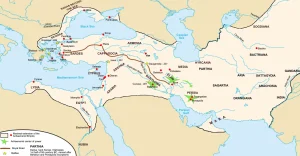
When we see Iran employing a strategy of “Victory Denial” or playing a complex geopolitical game with Russia and China, we are not just witnessing the tactics of a modern theocracy. We are seeing echoes of a civilization that has survived for millennia by mastering the arts of diplomacy, strategic patience, and unequal warfare against larger rivals. The sophisticated administrative state that allowed the Achaemenids to rule an empire is mirrored in the modern Iranian regime’s ability to project power and maintain control under immense pressure.
The historical memory of being a great power—of having an emperor who received tribute from across the known world—fuels a national pride and a determination that no amount of sanctions or airstrikes can easily extinguish. To the modern strategist in Tehran, this is not just a war with America; it is the latest chapter in a 2,500-year story of Persian resilience, adaptation, and survival against external powers.
Amid this chaos, a parallel drama unfolds: as U.S.-Israeli strikes weaken Iran’s clerical leadership, Reza Pahlavi, the exiled son of the last shah, is actively promoting a plan for a democratic transition. In discussions with figures like U.S. Secretary of State Marco Rubio, Pahlavi has laid out a roadmap involving popular protests and military defections, aiming to replace the Islamic Republic with a pro-Western, secular government—a shift with profound implications for the Middle East’s future.
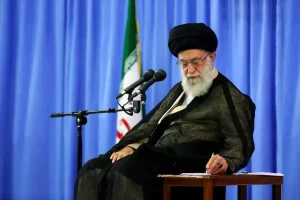
In his first message as supreme leader on March 12, 2026, Ayatollah Mojtaba Khamenei declared that the Strait of Hormuz will remain closed as a “tool of pressure,” targeting Iran’s neighbors due to US bases. Meanwhile, the International Energy Agency warns of the largest supply disruption in global oil market history as Iran’s actions keep oil prices elevated and the US Navy remains unprepared to escort vessels through the strait.
On the same day, Iran set stringent conditions for any ceasefire talks with the U.S., including security guarantees, amidst the intensifying conflict. Foreign Minister Abbas Araghchi emphasized that past negotiations led to attacks, indicating that dialogue with Washington remains improbable for now, with no talks currently taking place.
The New Face of War: From Air Supremacy to Victory Denial
The conflict between Iran and the United States has escalated quickly and is no longer just a regional issue; it’s become a global confrontation. What started with airstrikes has turned into a complex struggle involving destruction, intelligence, and economic strategies that pull in major powers worldwide. This is not just a battle for the Middle East; it’s reshaping global alliances and altering the geopolitical landscape.
According to IDF (The Israel Defense Forces) by 7 March 2026, over 80 Israeli fighter jets have dropped 230 bombs on Tehran and central Iran, hitting hidden missile sites. This intense bombing is in response to Iran’s new strategy called “Victory Denial.” Knowing it cannot win a conventional war against the U.S., Iran aims to make the conflict too costly for the U.S. to win. The first phase involves attacking America’s advanced radar systems, leaving them blind to incoming threats. The second phase is launching advanced missiles at a rapid pace to exhaust the U.S.’s interceptor missiles, creating a significant advantage for Iran over time.
Shadow of Global War: The Hidden Players in the Iran War
The global nature of the Iran conflict isn’t marked by clear declarations of war but by major powers providing secret support. This shadowy environment is filled with influential players like Russia, which is actively sharing real-time intelligence with Iran. This helps Iran accurately target U.S. assets, indicating that it has capabilities it wouldn’t have on its own.
Russia is invested in this conflict for a couple of reasons.
First, a blocked Strait of Hormuz would raise global oil prices, benefiting Russia as the second-largest oil producer. Second, a prolonged U.S. conflict with Iran distracts American focus, military resources, and political effort from the ongoing war in Ukraine, easing pressure on Russian forces.
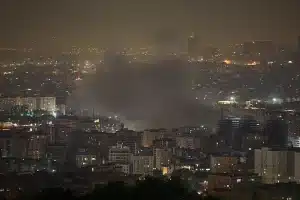
China takes a quieter yet essential role by managing resource control and technology. They control the global supply of gallium, a rare earth metal used in advanced radar systems destroyed by Iran. Additionally, China is suspected of providing Iran with missile materials and real-time satellite intelligence, helping Iran target U.S. forces. Meanwhile, Ukraine has also joined this global conflict by sharing its expertise in countering drones, hoping for future U.S. support against Russia.
As the situation intensifies, the U.S. military campaign against Iran has incurred approximately $10.35 billion in costs within just 10 days, averaging over $1 billion daily. This hefty expenditure represents about 1.23% of the entire U.S. defense budget for 2026, highlighting the financial stakes involved in this escalating conflict.
The Global Impact of the Iran War: Challenges for Allies and Trade
The concentration of U.S. military assets in the Middle East is creating dangerous gaps in defense elsewhere, a hallmark of a broader global conflict. Reports indicate that the U.S. is redeploying interceptor missiles from Taiwan and South Korea to reinforce its position in the Middle East. This move, driven by necessity, compromises the defense capabilities of these vital U.S. allies in the Indo-Pacific, which China and North Korea view as an opportunity to strengthen their own strategic positions.
Iran’s strategy has taken a diplomatic turn, as the Iranian President has proposed a deal to Gulf nations: if they prevent the U.S. from using their territory for attacks, Iran will refrain from targeting them. This approach aims to drive a wedge between the U.S. and its wealthy Gulf allies, who are growing increasingly concerned about threats to their security and oil infrastructure.
In a desperate attempt to regain control, the U.S. has also reached out to Kurdish insurgents, offering weapons and money to incite a rebellion for access to Iranian oil fields. However, the Kurds, wary of past betrayals, have largely rejected involvement in the conflict, frustrating U.S. military planners.
The Iran War is causing significant disruptions in global trade, affecting food, energy, and other supplies. Shipping costs have skyrocketed due to blocked routes, with the price of transporting goods like fabric from Turkey to China increasing from $2,000 to $10,000. The conflict has led to the largest supply disruption in the global oil market’s history, pushing oil prices above $100 a barrel.
This rise in energy costs impacts transportation prices, making everyday goods more expensive for consumers and contributing to economic uncertainty. Industries worldwide, from agriculture to manufacturing, are feeling the strain as essential supplies become harder to obtain.
The Iran War is causing significant problems for Thailand and Singapore, particularly in energy markets. With Iran responding to attacks by disrupting shipments through the Strait of Hormuz, prices for oil and natural gas have surged. Both countries heavily rely on imported gas to generate electricity, and rising costs are a major concern. While they are wealthy enough to manage these challenges, the governments are expected to step in to help mitigate the financial impact of this crisis.
The ISEAS-Yusof Ishak Institute’s State of Southeast Asia 2026 survey, published in April 2026, revealed a significant shift in regional attitudes amid the Iran war. According to the survey, 52% of Southeast Asian respondents favored alignment with China over the United States, compared to 48% who still preferred the US. The survey showed particularly strong preferences for China in Indonesia (80%), Malaysia (68%), and Singapore (66%), while only 23% of Filipino respondents favored China.
The ongoing war between the U.S., Israel, and Iran has significant implications for Europe, even though direct trade with Iran is minimal, accounting for about 0.03% of total EU imports. The Strait of Hormuz remains a crucial shipping route, through which approximately 20 million barrels of oil and a significant volume of liquefied natural gas transit daily. Disruptions in this region are causing energy prices to surge, prompting G7 countries to release 400 million barrels from strategic reserves.
Experts warn that continued price increases could lead to higher inflation and slower economic growth in Europe, effectively acting as a tax on households and businesses. Key countries like Germany, Spain, and Italy are particularly exposed, relying heavily on oil imports, while leaders maintain sanctions against Russia amidst rising concerns about market volatility.
The ongoing Iran War is critically affecting India, which heavily relies on oil imports from the Gulf, as nearly half of its crude oil, along with significant portions of liquefied natural gas (LNG) and liquefied petroleum gas (LPG), passes through the Strait of Hormuz. With around 10 million Indians working in the Gulf and contributing substantial remittances—$135 billion in 2024-2025—any disruption in the region poses significant economic risks.
The potential for rising oil prices, coupled with the reliance on Gulf energy supplies and the well-being of its diaspora, emphasizes the urgent need for India to navigate the escalating conflict with care, as it could lead to severe ramifications for energy security, finances, and diplomatic relations.
On 23 April 2026, Iranian forces seized two foreign container ships and fired on a third near the Strait of Hormuz. According to Indian officials, 22 Indian seafarers aboard two vessels were safe, with one Indian national among the crew taken into Iranian custody. Iran acted in retaliation for the US naval blockade of its ports, accusing the vessels of violating transit rules. The IRGC labeled Washington’s actions “armed piracy.” The incident underscores how the war has directly endangered civilian shipping and foreign nationals – a critical concern for India, which relies on the Gulf for nearly half its crude oil.
Separately, a leaked Pentagon email from April 2026 suggested that the United States was considering the suspension of Spain from NATO after Spain denied US forces access to its military bases for strikes against Iran. While experts pointed out that Washington cannot unilaterally expel a NATO member, the incident underscored growing strains in the bilateral relationship.
Iran’s Strategy: Crisis, Conditions, and the Future of Conflict
US bases will be attacked unless closed, says Khamenei; as of March 2026, Iranian President Masoud Pezeshkian has also outlined three core conditions for resolving the ongoing conflict with the U.S. and Israel: formal recognition of Iran’s sovereignty and nuclear rights, reparations for war damages, and firm international guarantees against future aggression. These demands aim to establish a long-term resolution amid escalating military strikes that began in February.
In response to the conflict, the Pentagon is deploying the USS Tripoli along with approximately 2,500 Marines to the Middle East as part of a broader military strategy to counter Iranian threats and reopen the vital Strait of Hormuz, which has seen rising oil prices due to conflict. Reports indicate that this deployment could involve an amphibious ready group (ARG) of up to 5,000 Marines and sailors, enhancing the existing naval presence near Iran.
The Tripoli will be joined by various vessels equipped for landing and helicopter operations, indicating that the U.S. military is considering a wider range of options, including the protection of commercial shipping and potential limited amphibious landings in the region.
European nations, particularly France and Italy, are engaged in negotiations with Iran to secure safe passage for ships through the Strait amid ongoing tensions and Iranian threats to keep the strait closed. While efforts are made to restart energy exports without expanding the conflict, there is concern that sustained blockage could severely impact energy prices and the economy.
💻 You May Also Read:
- Cyrus the Great: Architect of Persian Supremacy
- Landmarks in History: Iran’s First Encounter with Foreign Occupation
- Carter Doctrine: A Strategic Shift in U.S. Foreign Policy and Energy Security
- Gilded Age & Trump’s USA: 5 Shocking Parallels You Can’t Ignore
- Battle of Kars: A Historical Analysis of Ottoman-Persian Conflict
Recent reports indicate that Iran may allow oil tankers to pass through the Strait if shipments are traded in Chinese yuan, a strategy designed to manage tanker flow amidst heightened tensions. This proposed condition aims to facilitate “de-dollarization” and strengthen economic ties with China amidst rising regional tensions. The development has raised alarms since the Strait of Hormuz is a crucial corridor for global energy supplies.
As the situation escalates, questions arise regarding a potential ground invasion of Iran. Indicators suggest that U.S. military involvement could increase, including the readiness of airborne divisions and the possibility of special forces operations. However, public support for a ground invasion is low, as historical precedents show that heavy casualties often lead to diminished domestic backing for military actions.
U.S. military actions in Iran could significantly affect the outcomes of the upcoming congressional elections in November, according to political scientist Lincoln Mitchell from Columbia University. He notes that if the conflict persists for a few weeks before subsiding, its impact may diminish, allowing other issues to dominate the news cycle.
However, if the war escalates—particularly with ground troop deployments—it could be detrimental for the Republicans and Trump, especially as rising tensions may lead to economic inflation. This situation is compounded by the potential increase in global energy prices and market instability, with the blocking of the Strait of Hormuz already causing a surge in sulfur prices, which are essential for various industries.
Redirection Through Conflict: The Epstein Files and the Iran War
Before the bombs began falling on Iran, the world was captivated by shocking revelations from the Epstein files, which implicated high-profile figures such as Prince Andrew and former Prime Minister Ehud Barak. The release had led to arrests and sparked allegations of deep ties to Israeli intelligence.
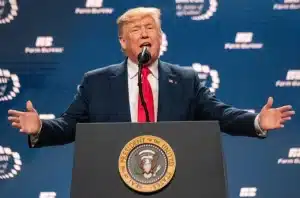
However, as the war commenced, analysts, including former Israeli diplomat Shaiel Ben-Ephraim, suggested that the attack lacked a strategic rationale and was primarily a means to divert attention from President Trump’s historic low approval ratings and growing economic concerns. Amid the chaos, Google searches for the Epstein files dropped significantly, as media and Congressional focus shifted to the conflict.
Republican Congressman Thomas Massie, who was instrumental in passing the Epstein Files Transparency Act, warned that bombing a country far away wouldn’t make the Epstein files disappear. His remarks highlight that while wars can temporarily redirect attention, the underlying truths of power and corruption remain. As Ben-Ephraim pointed out, this diversion appears to be succeeding, at least for now. The lingering question is whether, once the smoke clears, the Epstein revelations will emerge again or if those in power have finally discovered the ultimate method for burying their secrets forever.
God’s Divine Plan: How Christian Nationalism Is Fueling America’s War on Iran
The Military Religious Freedom Foundation has received over 200 complaints from U.S. service members alleging that commanders are using extremist Christian rhetoric to justify the war on Iran. One noncommissioned officer reported a commander claiming the conflict was “all part of God’s divine plan,” stating that President Trump was “anointed by Jesus” to ignite Armageddon. This complaint, filed on behalf of multiple troops, highlights a troubling pattern where Christian nationalists in government and the military impose their beliefs on personnel unable to voice objections.
Defense Secretary Pete Hegseth, who openly embraces Christian nationalist ideologies, has endorsed extreme views advocating for a Christian state and has shared content from fundamentalist pastors. The complaints suggest commanders are filled with “unrestricted euphoria” over what they interpret as a “biblically-sanctioned” war, signaling the approach of “End Times.” While the Pentagon has not addressed these allegations directly, they underscore serious concerns regarding the violation of church-state separation within the U.S. military command structure.
Russia’s Economic Gains and US-Turkey Tensions amid the Iran Conflict
As oil prices surge due to the Iran War, Russian President Vladimir Putin stands to gain economically and geopolitically. With energy prices rising, Russia can finance its war in Ukraine while diverting military resources from that front. Analysts suggest that the longer the Iran conflict endures, the more profitable Russia’s oil sales become, allowing the Kremlin to sell crude at increased prices and potentially bolster military funding amid economic strains.
In light of Europe’s plans to phase out Russian energy resources by 2027, Putin has indicated a willingness to redirect energy supplies to Asia, viewing emerging markets as advantageous alternatives. He criticizes European policies, including their green energy initiatives and sanctions, as factors that have exacerbated the current energy crisis. The demand from buyers willing to pay more reflects a shift in geopolitical dynamics, particularly with tensions arising from the conflict in Iran.
Additionally, Putin condemned a recent attack on a Russian gas tanker in the Mediterranean as a terrorist act, blaming Ukraine and warning of further disruptions. He expressed concerns over potential threats to key pipelines, like Blue Stream and TurkStream, which could destabilize European energy supplies. While the conflict provides immediate advantages for Russia, it also reveals challenges and shifting influence in the region.
Simultaneously, tensions between the US and Turkey could escalate as discussions in Washington consider supporting a Kurdish uprising against the Iranian regime. Turkey, concerned about the potential empowerment of Kurdish groups, views US backing as a direct threat to its national security and could respond aggressively if the situation deteriorates. The possibility of a refugee crisis arising from Iran’s instability adds another layer of complexity to Turkey’s already strained resources, potentially opening new fronts in a complicated regional landscape.
The Strait of Fire: How Iran’s Closure of Hormuz is Reshaping Global Power
Iran’s closure of the Strait of Hormuz has sent shockwaves through the global economy, impacting a critical passage for 20% of the world’s oil and 25% of its liquefied natural gas. Following Operation Epic Fury, which resulted in the assassination of Supreme Leader Ali Khamenei, the situation rapidly escalated into an energy war. With Western vessels barred from the strait, tanker traffic has plummeted by 70%, insurance companies have ceased war risk coverage, and oil prices spike to over $110 a barrel, the highest since the pandemic, amid increasing attacks.
While Western vessels are blocked, Iran has continued to transport millions of barrels of crude oil, primarily to China, highlighting a selective redirection of global energy flows. This strategic maneuver, unfolding amid the Iran War, leaves countries like Singapore, Malaysia, and Japan vulnerable as they grapple with rising energy prices and disrupted supply chains. Major shipping companies are suspending transits through Hormuz, and insurers now regard attacks in the region as inevitable.
This crisis represents a significant shift in global power dynamics, moving from West to East. Energy infrastructure is becoming a weapon, and the urgency for supply chain redundancy is clearer than ever. As gold prices rise and energy-linked assets gain traction, the world watches the dismantling of the old order. Those who navigate this upheaval with clarity and composure may find opportunities hidden within this turmoil, signaling the start of a new era in global trade and power.
On 2 April 2026, a UN Security Council resolution sponsored by Bahrain and backed by several Arab states was stalled. The draft resolution would have authorized “all necessary means,” including military force, to reopen the strait. According to reports from The New York Times, Russia, China, and France opposed the language permitting the use of force, effectively blocking the measure.
A United Nations study, reported by Bloomberg on April 1, 2026, warns that the U.S. and Israeli war against Iran could wipe out nearly $200 billion in economic growth across the Middle East, with Arab nations projected to lose between $120 billion and $194 billion in GDP. The Iran War has already closed the Strait of Hormuz, preventing Gulf countries like Qatar, Kuwait, Saudi Arabia, and the UAE from exporting much of their oil and gas. The UNDP warns that even a short-lived escalation could raise regional unemployment by up to 4 percentage points, cost 3.6 million jobs, and push 4 million people into poverty.
The hardest-hit regions are the Gulf states and the Levant, each expected to lose over 5.2% of their GDP. The Goldman Sachs Group, Inc. (an American multinational investment bank and financial services company) estimates that Qatar and Kuwait’s GDP could contract by 14% if the Iran War continues through April—their worst slump since the 1990s Gulf War. Saudi Arabia and the UAE face smaller but still severe drops of roughly 3% and 5%. The Iran War has also sent global energy and food prices soaring, and a separate UNDP analysis says Iran’s GDP will shrink by up to 10.4%, pushing over 3.5 million Iranians into poverty.
Alternative Oil Routes Beyond the Strait of Hormuz
As the Iran War disrupts global energy flows, while several pipelines exist to bypass the Strait of Hormuz, their combined capacity is insufficient to replace the massive volumes of oil that typically pass through this crucial chokepoint, which accounts for roughly 20% of global oil consumption. The most significant alternative is Saudi Arabia’s East–West pipeline, known as Petroline, which has a capacity of 5–7 million barrels per day.
The UAE’s Habshan–Fujairah pipeline can transport approximately 1.5–1.8 million barrels per day, allowing some UAE crude exports to avoid Hormuz. Additionally, Iraq’s Kirkuk–Ceyhan pipeline offers a route to Turkey’s Mediterranean port, with a capacity of around 1.6 million barrels per day, though it is hindered by political tensions and security issues.
Despite these options, the total bypass capacity falls far short of the nearly 20 million barrels per day normally shipped through the Strait. Smaller regional pipelines, like the Saudi Arabia–Bahrain pipeline, offer limited logistical support but do not significantly alleviate large-scale disruptions.
Ongoing proposals for new bypass projects, such as an Iraq-to-Jordan pipeline, remain in development and have not yet materialized. In summary, while alternative routes can provide some contingency capacity, they cannot adequately compensate for a prolonged closure of the Strait of Hormuz, which remains a strategically vital location in the global oil supply chain.
Iran Rejects Ceasefire and Warns of Rising Oil Prices
On March 8, 2026, Iran’s Foreign Minister Abbas Araghchi dismissed calls for a ceasefire in the ongoing Middle East conflict, asserting the need for continued resistance against U.S. and Israeli actions. Amid the ongoing Iran War, he highlighted the suffering of Iranian civilians and rejected further negotiations, advocating for a permanent resolution to ensure security and welfare.
Days later, Iran’s military command warned that global oil prices could soar to $200 a barrel due to escalating conflict, with threats to critical energy supplies in the Gulf shipping lanes. Ebrahim Zolfaqari, a spokesperson for Iran’s military, emphasized that foreign intervention drives regional security issues, contributing to market uncertainties.
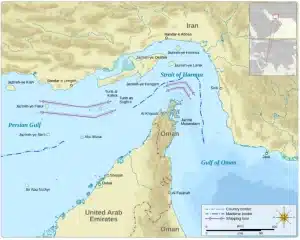
On March 11, a Thai-flagged cargo vessel was struck by two missiles shortly after departing from the United Arab Emirates, highlighting rising volatility in the region. The Thai National Shippers’ Council urged shippers to reconsider their routes amid fears of further escalations in maritime security.
Amid the escalating Iran War, several countries including Saudi Arabia, the UAE, and Spain have refused to allow U.S. military actions against Iran on their lands. These nations aim to avoid deeper regional conflicts and maintain diplomatic relations with Tehran, reflecting a broader division within Europe regarding military involvement in the Iran conflict.
The Second Front: Iran’s Threat to Bab el-Mandeb
As the Iran War continues to reshape global energy markets, a new threat has emerged that could push oil prices to $150 a barrel. Iranian military officials have warned that if the United States and Israel escalate attacks on Iran’s energy infrastructure, Tehran will unleash its proxies to close the Bab el-Mandeb strait—a vital Red Sea choke point through which approximately 10 percent of the world’s oil and natural gas flows.
The strait, located at Yemen’s southwestern tip, has been targeted before by the Iran-backed Houthi rebels, who used drones and missiles to disrupt global shipping between 2023 and 2025. Though a ceasefire paused those attacks, the group’s leader recently warned that “our hands are on the trigger,” signaling readiness to rejoin the fight if the Iran War escalates.
The closure of Bab el-Mandeb would compound the already historic disruption caused by Iran’s blockade of the Strait of Hormuz, effectively cutting off alternative shipping routes that Saudi Arabia and other Gulf states have relied upon. Major shipping companies like MSC and Maersk are already avoiding the region, and experts warn that a coordinated attack could increase the current 10 million barrel-per-day disruption to as much as 17 million barrels.
For the Trump administration, which has threatened to “unleash hell” on Iran’s energy infrastructure, the prospect of a second closed strait presents a dangerous escalation. As the Iran War drags on, Tehran has discovered the immense global leverage it holds by weaponizing the world’s most critical maritime chokepoints—a lesson that threatens to prolong the conflict and deepen its economic toll worldwide.
The Digital Front: How the Iran War is Severing Global Data
For the first time in history, both the Strait of Hormuz and the Red Sea are active conflict zones, threatening not only global energy supplies but also the undersea cables that carry the world’s data. Seventeen submarine cables pass through the Red Sea alone, handling the majority of internet traffic between Europe, Asia, and Africa. If any are severed, specialized repair ships cannot safely enter either passage. The danger is not theoretical: drones have already struck three AWS data centers in the Gulf, prompting Amazon to warn customers to consider moving workloads out of the Middle East entirely. As one analyst put it, “Closing both choke points simultaneously would be a globally disruptive event.”
The crisis exposes a fundamental failure of U.S. strategy. Billions of dollars in American technology infrastructure—from Amazon, Google, and Microsoft—were built on the assumption of Gulf stability, yet security frameworks focused on keeping advanced chips from China rather than protecting physical infrastructure from Iranian missiles. The Iran War has now validated what threat models long warned of: the region’s AI ambitions rest on fiber-optic cables running through war zones. As the Gulf states prove capable of defending their skies, the question remains whether Washington will treat digital infrastructure with the same urgency it has long reserved for oil.
Iran War: Islamabad Talks Fail, US Blockades Hormuz
The Iran War took a critical turn when high-level peace negotiations in Islamabad collapsed on April 12, 2026, after over 21 hours of talks. Despite Pakistan’s mediation efforts, the discussions between US Vice President JD Vance and Iranian delegates failed over key disagreements, including Iran’s nuclear program and control of the strategic Strait of Hormuz. US officials said Iran refused to accept American “red lines,” which included never obtaining a nuclear weapon, ending uranium enrichment, dismantling major enrichment facilities, and opening the strait. Following the breakdown, the ceasefire that had paused the six-week Iran War remains fragile and is set to expire on April 22, with no word on whether negotiations will resume.
On April 13, 2026, President Trump ordered the US Navy to initiate a complete blockade of all Iranian ports and coastal areas, set to begin at 2:00 PM GMT. The US Central Command announced the blockade would be enforced “against vessels of all nations entering or departing Iranian ports and coastal areas,” though ships transiting the strait to non-Iranian destinations would not be impeded.
Iran responded with severe threats, warning that “NO PORT in the region will be safe” and that if the US fights, “we will fight.” Tehran has controlled this vital waterway since the Iran War began on February 28, 2026, and has labeled the US move an “act of piracy.” British Prime Minister Keir Starmer announced that the UK will not support or join the blockade, saying “we are not getting dragged in” to the war. France, Spain, and Turkey also criticized the move, while China urged both sides not to reignite the conflict.
On 23 April 2026, U.S. President Donald Trump stated that he would not use a nuclear weapon in the war against Iran, saying “a nuclear weapon should never be allowed to be used by anybody.” Trump claimed the U.S. military had already “decimated” Iran conventionally and could destroy any rearmed Iranian weaponry in about one day.
Operation Project Freedom: America’s Failed Escort Mission
Operation Project Freedom was a United States military operation launched on May 4, 2026, to escort merchant vessels through the Iranian-blockaded Strait of Hormuz. According to U.S. Secretary of State Marco Rubio, the operation aimed to rescue 23,000 civilians from 87 countries stranded in the Persian Gulf. On May 5, 2026, Defense Secretary Pete Hegseth described Project Freedom as “defensive in nature, focused in scope and temporary in duration,” distinguishing it from the broader Operation Epic Fury in Iran. During the operation, Iran targeted a UAE tanker, while the U.S. sank seven small Iranian boats. Danish shipping company Maersk confirmed that one of its vessels successfully crossed the strait with U.S. military escort.
However, on May 5, President Trump announced on social media that the escorts would be “paused for a short period” while the U.S. and its allies pursued an agreement to end the war with Iran. Trump stated the decision was based on a request from Pakistan—a key mediator in peace talks. Hours before the pause, a French-owned ship was targeted and hit while trying to cross without Iranian approval. According to The New York Times, the real reason for the pause was that Saudi Arabia denied the U.S. access to its airspace and bases, fearing the operation was poorly planned and would escalate the conflict with Iran. The operation remains on hold.
The Fragile Ceasefire: June 2026
By late June 2026, the Iran War had entered a shaky pause. On June 15, the United States and Iran signed a Memorandum of Understanding (MoU) that officially ended active fighting and reopened the Strait of Hormuz. However, experts called this a “tactical timeout”—not real peace. Both sides were tired and needed a break, but deep problems remained.
Iran still wants control over the strait and keeps its nuclear program. The U.S. wants Iran to stop enriching uranium. Neither side has given in.
The ceasefire broke almost immediately. On June 26, Iran attacked the Singapore-flagged ship Ever Lovely near the strait. President Trump called this a “foolish violation”. The U.S. struck Iranian military targets in return. Iran claimed it hit U.S. positions too.
The Strait of Hormuz remains dangerous. Iran now requires all ships to get permission from its new Persian Gulf Strait Authority to pass safely. Shipping companies are confused and scared. Oil prices, while lower than during the worst fighting, are still much higher than before the war.
Israel’s Isolation: How Defending an Ally Backfired
The U.S.-Israeli partnership that started the Iran War has fractured, leaving Israel more isolated than before and exposing the limits of American hegemony. The breaking point came when Washington signed a unilateral truce with Tehran, shutting Israel out of negotiations . What Israelis had hoped would be a “golden age” of alliance became a strategic nightmare .
The personal rift between Trump and Netanyahu is striking. On June 2, 2026, Trump angrily confronted Netanyahu over Israel’s threats to bomb Beirut’s southern suburbs in Lebanon . According to Axios, Trump shouted: “What the fuck are you doing? You’re fucking crazy. You’d be in prison if it weren’t for me. I’m saving your ass. Everybody hates you now. Everybody hates Israel because of this.” The call came after Iran suspended peace talks with the U.S. because of Israel’s Lebanon campaign .
Only 13% of Israelis now trust Trump to protect their interests . Vice President JD Vance warned Israel that Trump is “the only head of state in the entire world who is sympathetic to the nation of Israel” . The once-close alliance has reached its lowest point in years.
Conclusion: Iran’s Growing Dominance and a Dangerous New Phase
On March 15, 2026, as the Iran War raged on, Iranian Foreign Minister Abbas Araghchi delivered the defining statement of the conflict: “The Strait of Hormuz is open.” It is only closed to the tankers and ships belonging to our enemies, to those who are attacking us and their allies. Others are free to pass.” In these words, Iran laid bare the new reality: Chinese, Indian, Japanese, and South Korean vessels pass freely. Only American, Israeli, and allied ships are turned away or attacked. The world’s most critical energy artery now flows not on American guarantees, but on Iranian permission.
What we are witnessing is the end of an era. A regional power has successfully redrawn the rules of global energy transit by excluding the world’s sole superpower and its closest ally. For Israel, this is an existential signal: its primary protector cannot guarantee passage through waters it once dominated. For America, it is a humbling lesson in the limits of military might. For Asia’s major economies, it is a warning that their energy lifelines now depend on Tehran’s terms.
Yet the war is far from over. On the same day, Britain confirmed it is considering sending ships and mine-hunting drones to the strait—a clear sign the conflict continues to draw in new powers. President Trump’s call for allies to deploy naval vessels has revealed tensions even among allies, with the US having previously dismissed British help as “a little bit late.” With oil prices soaring from $65 to $100 per barrel, Britain’s potential intervention underscores a dangerous new phase where even America’s closest allies must choose between military entanglement and economic collapse.
Moreover, on March 16, 2026, EU foreign ministers are set to discuss extending their naval mission, Aspides, to the Strait of Hormuz, following pressure from US President Donald Trump on allies to secure the key oil route after Iran blocked it. However, Germany has already ruled out participation. Japan’s defense minister stated that it has no plans to send warships, prioritizing diplomatic efforts instead, as energy prices remain above $100 a barrel. Beyond oil, the war has exposed a new vulnerability: the undersea cables carrying the world’s data now lie in the line of fire, threatening to sever the digital economy just as Iran has choked the flow of energy.
As if Hormuz were not enough, Iran has now threatened to close a second vital choke point—the Bab el-Mandeb strait in the Red Sea—where its Houthi proxies stand ready to unleash a new wave of attacks, threatening to compound the worst energy disruption in history.
This is no longer just a war about Iran; it is a war that is fundamentally challenging US hegemony. While the Carter Doctrine once cemented U.S. dominance by securing Gulf oil, the Donroe Doctrine’s unwavering support for Israel has now left American hegemony exposed and challenged in the very region it once commanded.